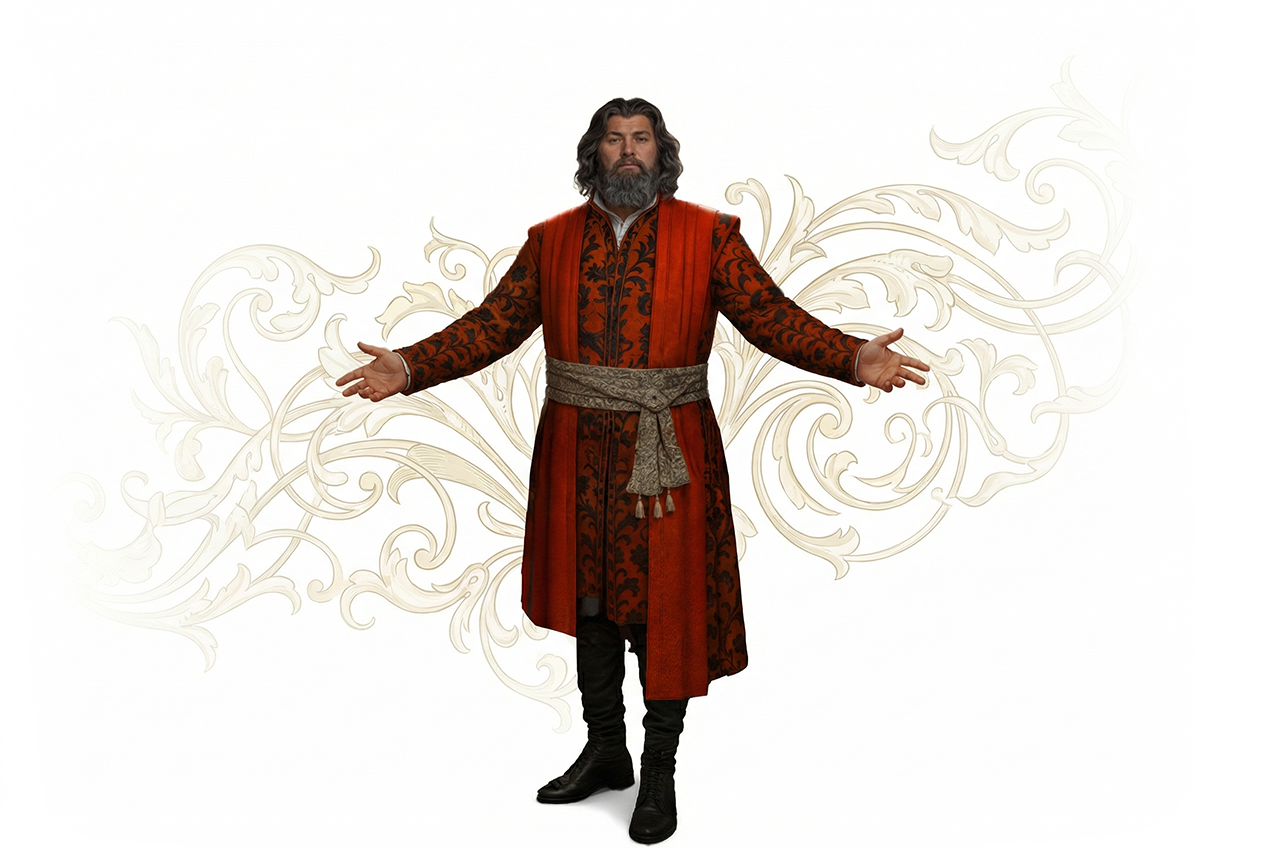
When he met her, he was not yet twenty. He was defiant, yet extraordinarily charming; full of pride, but also capable of humility toward his enemies. Confident, without arrogance. He carried out his plans with precision. He disliked anyone gaining access to his secrets. He shared only what was unnecessary or easy to obtain.
He had a weakness for money and ars amandi. Possessing both, he reached for power over minds and purses alike. Knowing the greatest weaknesses of the mighty and the great, he strengthened those who then—and still today—remain hidden. Erazm Czeczotka won the friendship of few. Obedience—from almost everyone. He moved with ease through the worlds of contemporary learning, finance and mystery.
In Poland, the Jagiellonian dynasty ruled. Over centuries, through diplomacy, dynastic alliances and international treaties, the Jagiellonians built the Polish–Lithuanian Commonwealth, in which the Crown, Lithuania, Bohemia and Hungary held the most important positions. Their power stretched from the Baltic Sea to the Black Sea and the Adriatic. The Commonwealth bordered Italy. From there came to Kraków the woman who would change Erazm’s life. For her, and because of her, he carried out his plan.
When she left Kraków, she left him her testament. Not one concerning wealth, but the tools to acquire it. She knew he would keep his word. And so he did. Much separated them—right up to the very end. He came from an almost unknown family; she was a princess of Bari and Rossano, heir to claims to the Kingdom of Jerusalem. He, born out of wedlock, most likely fathered dozens of children, of whom only two were recognised as heirs. She bore six children, two of whom ascended the throne of Poland. She died in agony, poisoned by a trusted servant; he died in his bath, drinking wine and entertaining girls.
He passed into history as the Bloody Mayor. She—as a poisoner, bound by blood and marriage to popes and the Borgias.
Everything began on the day he first crossed the walls of Wawel. He had been sent to deliver silks and fine fabrics for the gowns of the ladies of the court. While the women examined the lace, the queen herself entered the chamber. She was interested not only in what her ladies would wear, but also in the supplier of the fabrics—a man fluent in Latin. They spoke of fashion and Italian style. Erazm was invited to a meeting at which he was to receive guidance on which textiles should be brought to the queen’s court.
At that moment, he could not have known that he would be admitted to the secret gatherings of the “Brotherhood of Merry Sisters and Brothers”, nor that from then on he would come to know the greatest figures of politics and science. He gained access to the greatest secrets because he uniquely bridged two worlds: those who stood upon the pedestal, and those who placed them there.
Erazm possessed yet another advantage—excellent contacts with astrologers and alchemists, whom he supplied with all the substances they required. The liberal arts taught at the Kraków Academy attracted all those seeking formulas both for saving life and for taking it away. The finest alchemists were trained here—men later employed at European courts, also for the purpose of closing their enemies’ eyes forever.
For Czeczotka, reaching for offices, titles and honours was only a matter of time. For forty years he served as councillor, juror, repeatedly as mayor and burgrave. Many regarded him as an exceptional man; even more considered him dangerous and untouchable. And so it was. Every attempt to discredit Czeczotka ended in failure. Erazm held the greatest shield of all—a secret for which he was willing to sell even himself. He rarely had to. He always received support from those who were initiated.
Much changed when Jan Dantyszek arrived in Kraków—a poet, friend and later superior of Nicolaus Copernicus, and the first Polish ambassador to gain favour at Europe’s great courts, especially in Spain. Dantyszek oversaw the negotiations for the marriage of King Sigismund the Old and was instrumental in arranging his union with Bona Sforza. He arrived in Kraków in 1533.
One evening, he took part in one of the many poetic and musical gatherings organised at Bona’s request in place of lavish noble feasts. Erazm was present and listened to Dantyszek’s recitations. Later, he heard many other truths—foremost among them that a secret must remain a secret. Less than a year later, Jan Dantyszek received holy orders and became bishop. It was the queen herself who ensured this, having obtained from Pope Leo X the right to decide appointments to fifteen of the most important ecclesiastical benefices in Poland.
Erazm had two brothers who served as jurors; he himself assisted his father. Year after year, the number of stalls in the Cloth Hall owned by the Czeczotka family increased. So too did the number of secret gatherings—whose organisation Erazm mastered to perfection. In 1539 he married Barbara Krupkówna, a childless widow of Mikołaj Jaskier, author of a codification of municipal law. Barbara, owner among others of the castle in Korzkiew, brought a substantial dowry—but this was not why Erazm chose her. Through this marriage, Czeczotka entered into relations with the Italian Montelupi family, which decades later would manage the royal postal service.
Contacts with Italy were crucial—not only because of the queen’s origins. Many artists, especially sculptors and stonemasons, settled in Kraków, carrying out royal commissions for the most important buildings. They had been brought by Sigismund the Old; Bona expanded their ranks, inviting builders worthy of a kingdom’s power. After the death of Piotr Gamrat—Bishop of Kraków, Primate of Poland and friend of the queen—Bona commissioned Jan Maria Padovano to create his tomb at Wawel Cathedral. Gabriel Słoński, Padovano’s pupil, would become Czeczotka’s close associate.
Two years after Gamrat’s death, and one year after a meeting organised by Stanisław Myszkowski between Andrzej Frycz Modrzewski and the future Primate Jakub Uchański, another participant received the title of city councillor. Erazm Czeczotka had to set aside his business affairs in favour of public office. Yet his fortunes only grew. He owned several villages, leased others, including manorial estates, and possessed multiple townhouses. In 1547 he was elected Mayor of Kraków.
The following year was decisive. King Sigismund the Old died. So did Primate Jan Dantyszek. Bona decided to leave Kraków forever—to forget a city where she had experienced both triumph and bitterness. Distance now separated them; a secret still bound them. Thus ended the most important chapter of Erazm’s life.
Soon another queen appeared at Wawel—Barbara Radziwiłł, secretly married to Sigismund Augustus without the consent of the estates. The king, madly in love, enjoyed her presence only briefly. The queen fell ill. Renowned physicians competed with remedies and potions. Erazm remained a silent adviser—he knew how many alchemists purchased their preparations from him. Barbara died on 8 May 1551, leaving the king in devastating grief. To soothe it, her spirit was summoned. The task was carried out by Jan Twardowski, resident of the house opposite the Czeczotka Palace, a student of Faust himself. He was one of many alchemists well known to Czeczotka—but it was he whom Erazm indicated as capable of easing the king’s sorrow. The king’s gratitude soon followed.
At the Piotrków Seym in 1552, Czeczotka was ennobled and admitted to the coat of arms of Jan Ocieski, trusted confidant of Queen Bona. From then on he used the name Czeczotka-Tłokiński of the Jastrzębiec arms. Ocieski became Grand Chancellor of the Crown, relinquishing the office of Burgrave of Kraków. Erazm assumed that position for the next five years, quickly becoming one of Kraków’s most eminent figures. With three hundred foot soldiers, he was stationed at Wawel, safeguarding order—first among courtiers, then among townspeople.
Kraków was far from a peaceful city. Thus Czeczotka added hundreds of lesser secrets to his greatest one—especially when, only a year after his ennoblement, he was responsible for security during the Great Seym, the only one convened in Kraków under Sigismund Augustus.
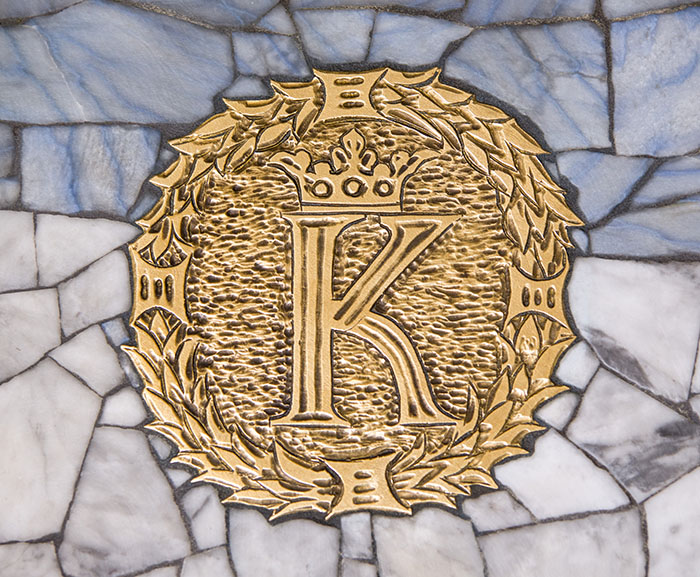
The capital of the Crown was a vast crucible: nobles and paupers, the righteous and criminals, scholars and illiterates, virtuous maidens and street girls. Cultures and religions intermingled. Bona was far away in the north of the country. Erazm saw her only a few times after she left Kraków—the last when she received permission to depart Poland for Bari. They parted on the road to Venice, her final stop, where she dismissed her entire Polish retinue. The most powerful and wealthiest woman in Europe accepted from Erazm a golden medal bearing his likeness and the inscription “Procul Este Profani”—“Begone, the uninitiated.” Those around her left only after delivering the final dose of poison—and looting everything she owned.
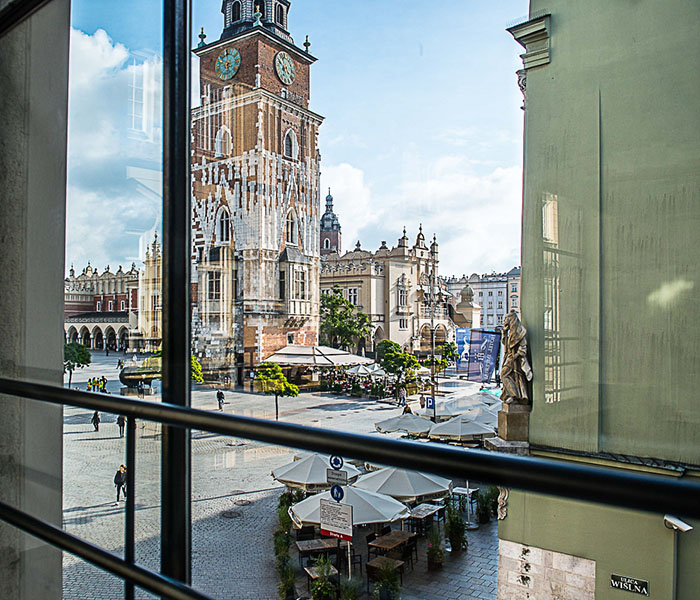
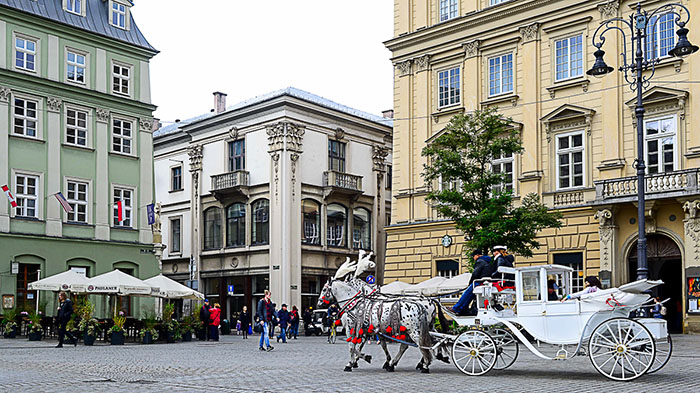
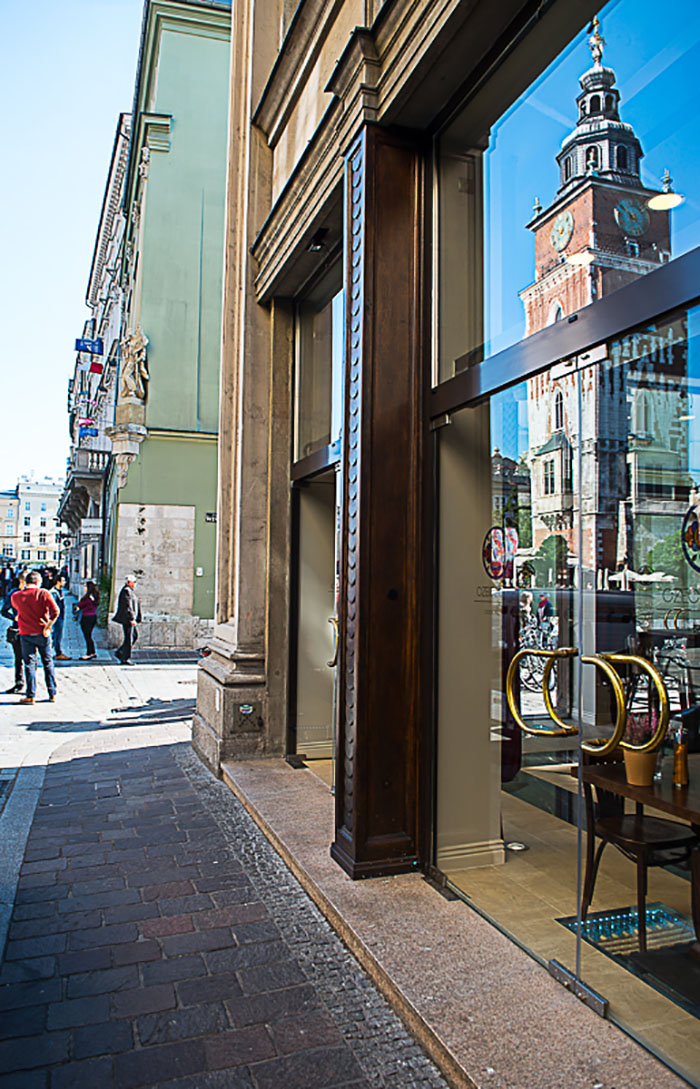
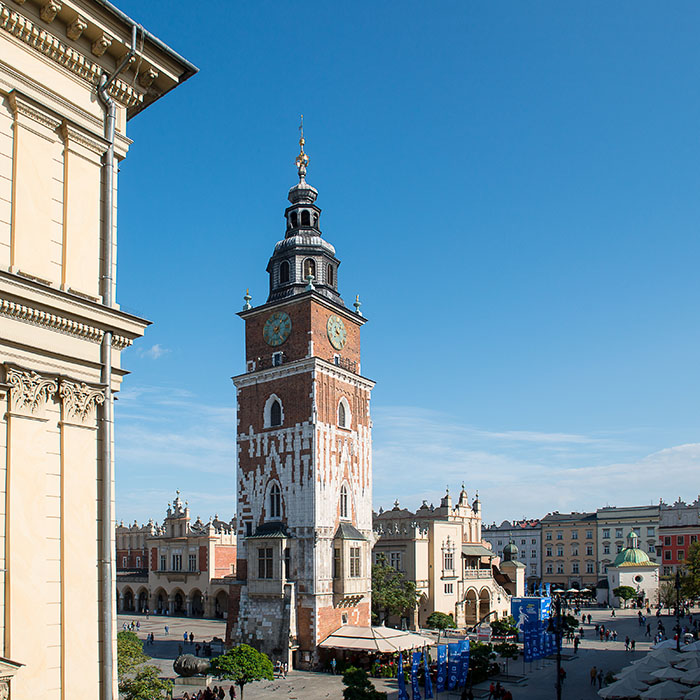
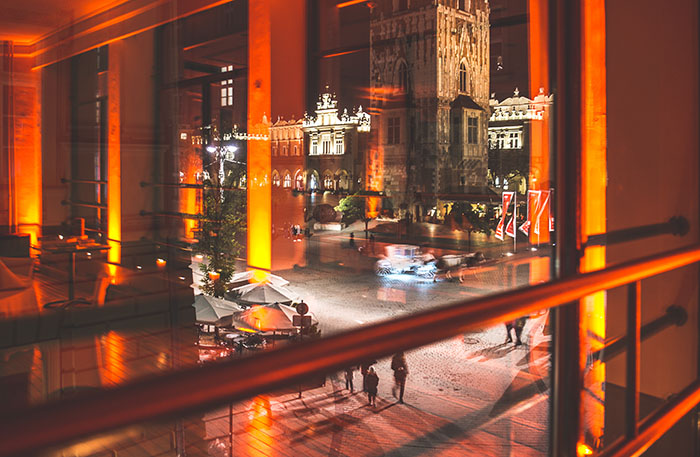
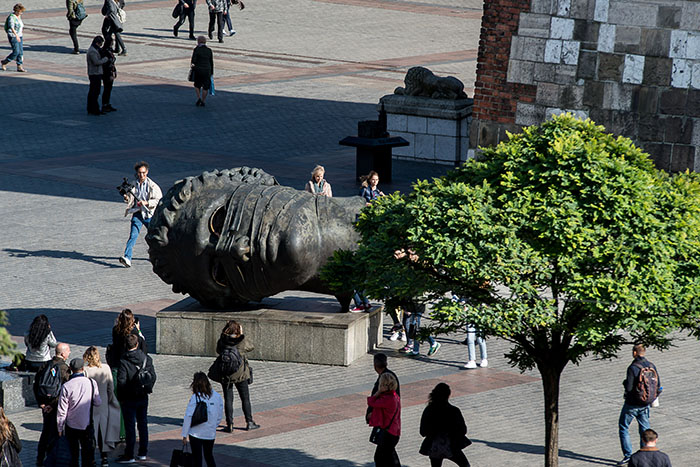
Erazm plunged into work. After Bona’s departure, the reconstruction of the Cloth Hall began. The arcaded loggias were designed by Padovano; the grotesque mascarons by Santi Gucci. Their exaggerated, mannerist faces were modelled on city councillors—among them the head of Mayor Czeczotka himself. Later he was accused of building new stalls for his own benefit. In truth, he was no longer merely a cloth merchant, but an entrepreneur trading food and luxury goods imported from across the realm and abroad.
He was wealthy—a fact that robbed many rivals of sleep, especially those who, like him, had a weakness for women. Any woman who caught his eye had to be his. In female arms he sought pleasure and oblivion—after the one woman he could never touch again.
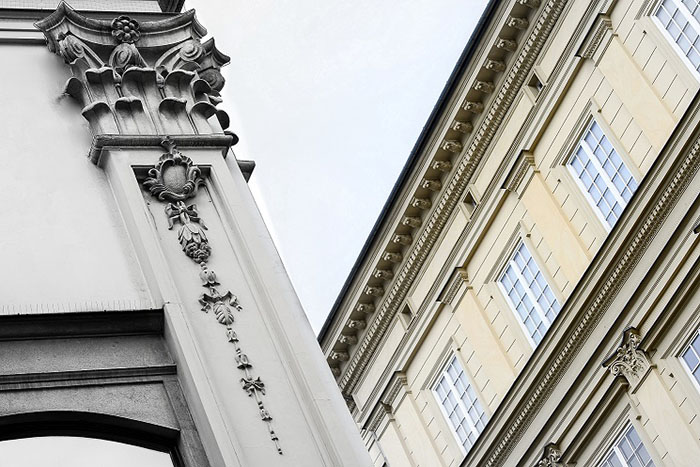
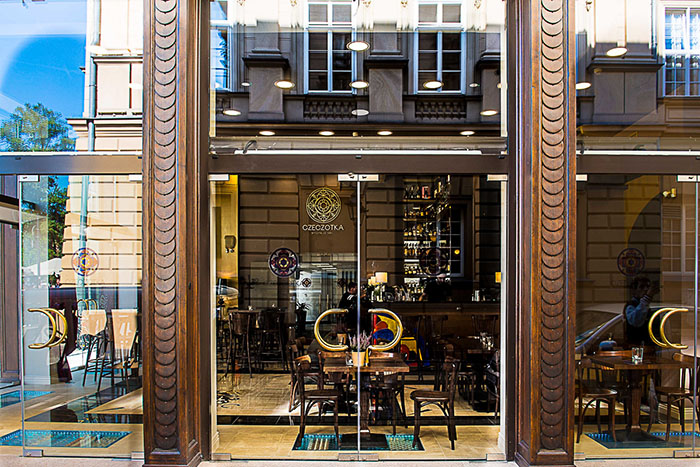
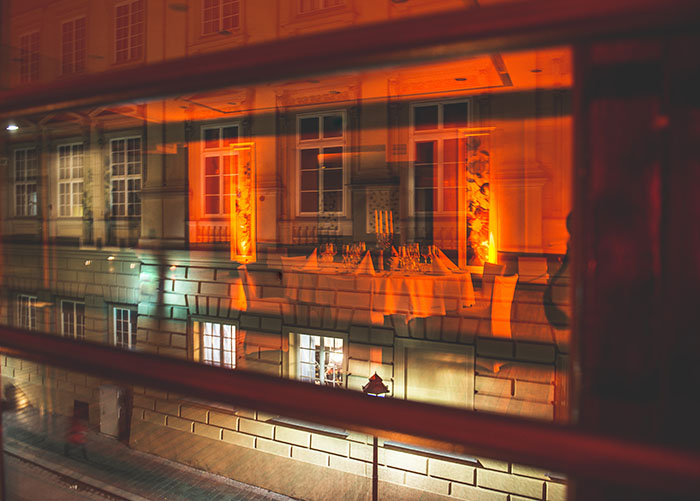
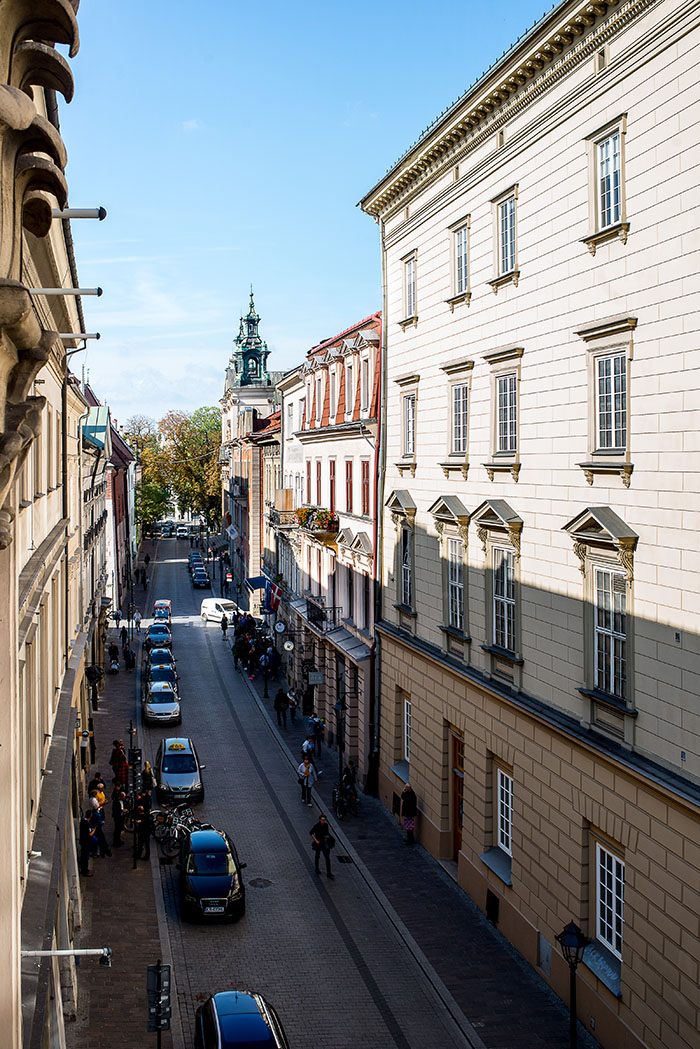
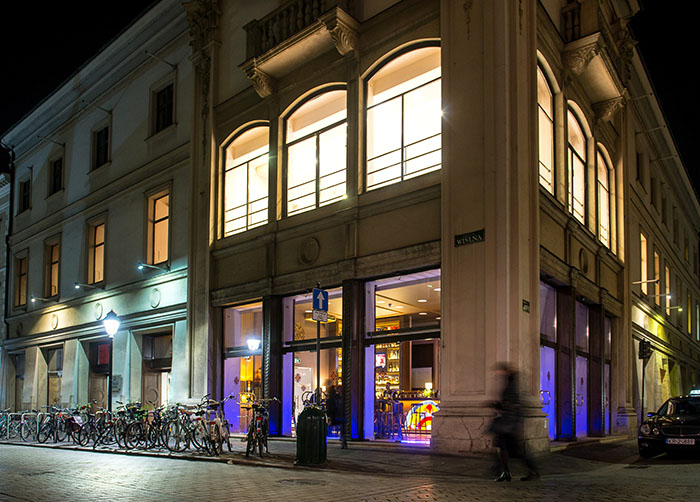
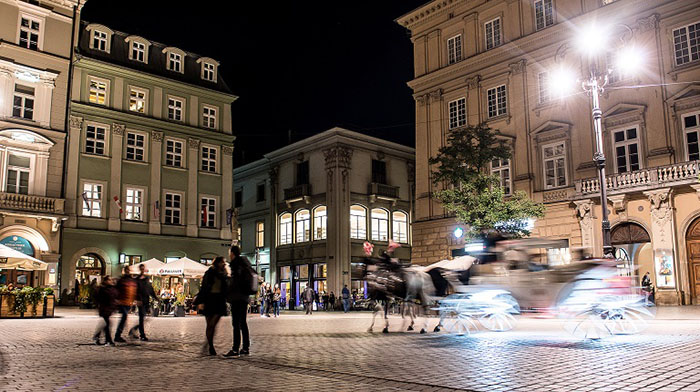
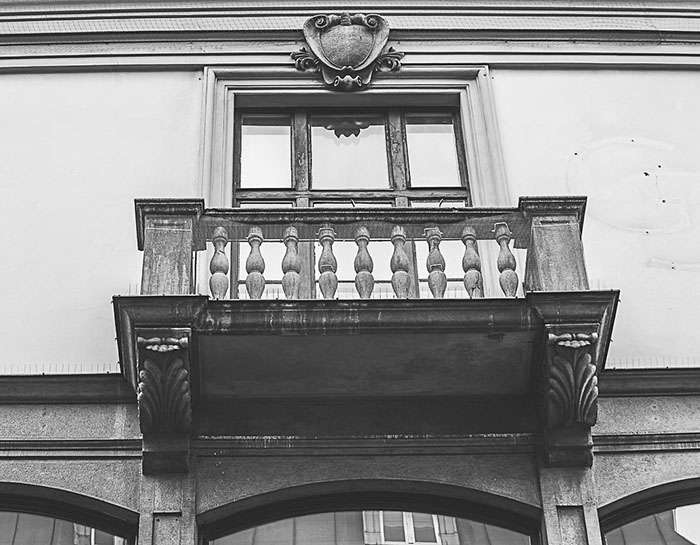
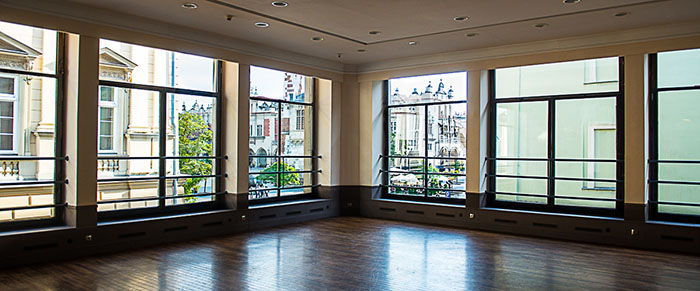
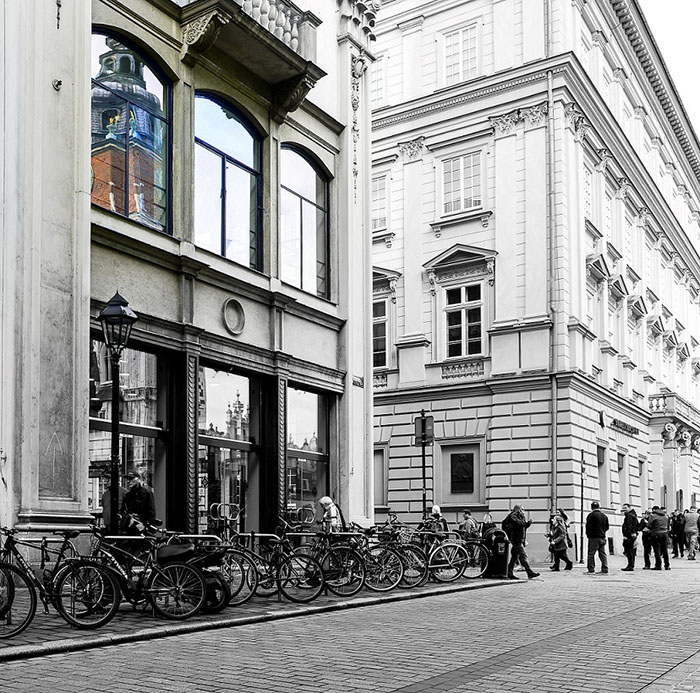
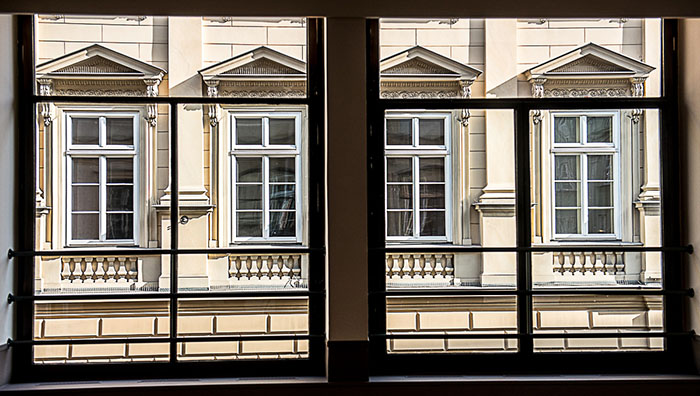
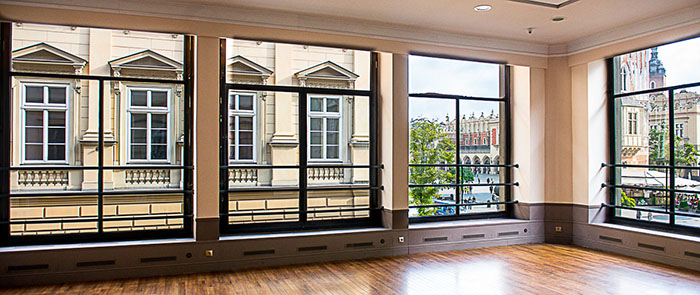
Sukiennice, the Town Hall and Wawel. Within this triangle Erazm’s life unfolded. He inherited diligence and a family house on Wiślna Street from his father. He purchased the neighbouring property on St. Anny Street and became the first in Kraków to unite two townhouses. He entrusted the task to Gabriel Słoński, elder of the stonemasons’ and masons’ guild. Thus, in 1564, a magnificent palace arose, with sculpted portals and attics. Its creator was appointed City Mason and, a year later, built the great municipal armoury by the Florian Gate.
Erazm recognised Słoński’s great potential. He knew the man could keep secrets—and entrusted him with many. Gabriel rose from obscurity to become a renowned architect and stonemason. Years later, at the request of Bishop Filip Padniewski, he would build one of the most important edifices of the era—the Bishops’ Palace.
When Stanisław Myszkowski became Voivode of Kraków, Erazm wrote his will. He knew death could come at any moment. Not because he relentlessly pursued his plan, nor because he harshly punished those who threatened it. Not even because of his weakness for women. Though his wealth rivalled that of magnates, it troubled him less than the manner of Bona’s death. He knew he might share her fate.
Alchemists had grown too confident—like many students of the Kraków Academy. The city seethed with brawls and conspiracies. Franciszek Wolski, master of the liberal arts and rector of the Holy Spirit school, was a brawler and criminal. A frequent guest at the Czeczotka Palace, he overstepped the boundary. Not by courting one of Erazm’s favourites—but by breaking a sworn word. That meant he could betray a fragment of the secret.
When Wolski vandalised the Town Hall at night, the mayor imposed the penalty for insulting the authority of power—death. The sentence was carried out in the Market Square amid an enraged crowd. Many considered the punishment too severe—but not those who had touched the secret. Each time accusations were raised against Czeczotka, he received confirmation of his righteousness from those who knew his true worth.
After the Kraków visitation by Bishop Filip Padniewski, King Sigismund Augustus issued a decree ordering students to respect the law and banning the carrying of weapons—to prevent further attacks, including on the Czeczotka Palace.
Less than a year later, Gabriel Słoński completed the Bishops’ House and became a city councillor. From builder he became a politician and mentor to his brilliant successor, Jan Michałowicz of Urzędów—the man entrusted with works requiring equal measures of talent and loyalty.
Meanwhile, Erazm built his small empire. He acquired more townhouses, villages, estates and a mill. He leased the Great and Small Municipal Scales and owned the majority of the 342 stalls in the Cloth Hall.
Distinguished guests crossed the threshold of his palace. For them, he had once ordered Słoński to build a bathhouse with a great hall for feasting. During banquets attended by carefully selected patricians, long debates were held over goblets of the finest wine—imported by Erazm himself from the vineyards of Bari.
The 1570s—the height of Kraków’s Golden Age—were turbulent. The childless death of Sigismund Augustus closed another chapter of Erazm’s life. The first interregnum followed. The nobility sought a husband for Queen Anna Jagiellon. The candidacy promoted by Jan Zamoyski prevailed—Henry of Valois. Eight days after Sigismund’s ceremonial funeral at Wawel, Bishop Jakub Uchański crowned the new king. The City Council swore allegiance.
The king is dead—long live the king! Balls, tournaments and revelry filled the city. Anna never married. Four days after hosting a grand ball, Henry fled in disguise to claim the French throne. Escaping castles under cover of night was nothing new to him.
An interregnum in such a powerful state was dangerous. As mayor, Czeczotka strengthened fortifications, guards and armaments. The streets were restless. Attacks on dissenters erupted; even the remains of Voivode Stanisław Myszkowski were exhumed and dragged through the streets.
A king has fled—let us find a king! The nobility chose Anna Jagiellon as ruler, but she needed a husband. Again Jan Zamoyski’s diplomacy prevailed—Stephen Báthory ascended the throne. For the king and for Czeczotka, ten uneasy years followed.
Zamoyski began building the greatest fortune in Poland. In 1577 he married Krystyna Radziwiłł, niece of Barbara. That same year he became Starosta of Kraków and founded Zamość. Erazm enjoyed the trust of both Zamoyski and the king. In 1578, when a list of thirty-four dishonourable acts was drawn up against him, Stephen Báthory cleared him of all charges and ordered eternal silence from his accusers.
It mattered little. Erazm knew the value of silence—his enemies did not. He continued his plan. Even during the lavish wedding of Zamoyski and Gryzelda, niece of the king, he presented them with a medal bearing the inscription “Procul Este Profani”—with the sun and moon.
Czeczotka watched the world change. Those he had known rose to the highest offices, built fortunes, gained fame. He himself did not enjoy universal esteem. Centuries later he would be called the Little Cesare Borgia of Kraków, accused of deeds he never committed.
In his final months he lived as before—working, feasting, enjoying life. His vitality seemed inexhaustible. King Báthory declined in health; even the greatest alchemists, including John Dee, could not save him. He died in December 1586.
Erazm did not live to see the election of Sigismund III Vasa. He died in his bath, feasting and amusing himself in the company of beautiful women. He left a fortune envied by many magnates. After his death, disputes over his legacy revived accusations of greed and corruption. His line died out, as did the Montelupi, Boner and Bethman families with whom he had been closely connected.
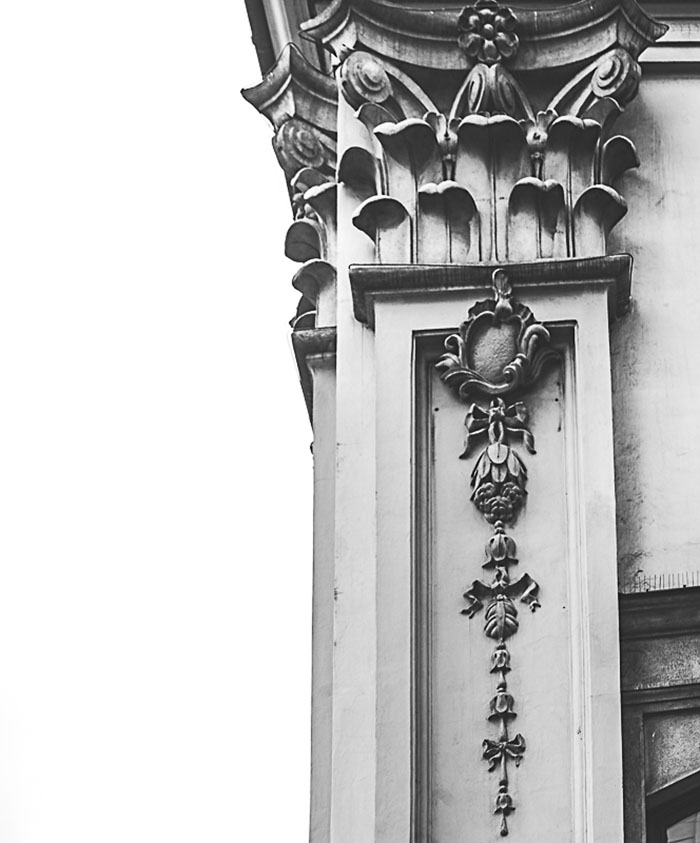
All because of a secret, of which only faint traces remain—the sculptures on the wall of the former service wing of the Czeczotka Palace.